
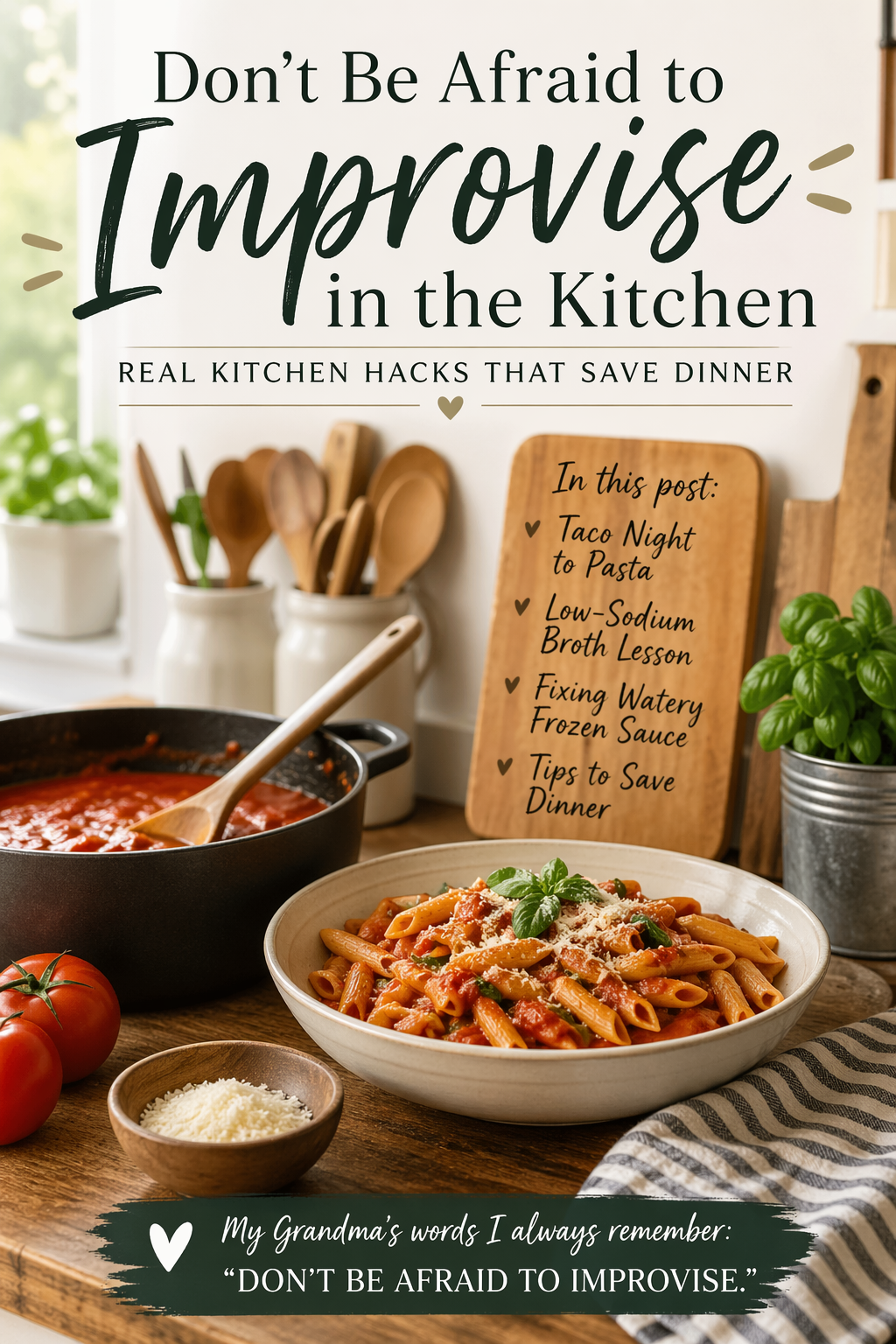

Don’t Be Afraid to Improvise in the Kitchen
“Don’t be afraid to improvise.”
Those are the words I live and die by in my kitchen. They mean so much in so many different ways. Not only does this mindset allow me to think creatively when I’m cooking, but sometimes kitchen mishaps happen — and when they do, I simply improvise my meal plan.
Take taco night for example. Taco night is a big deal in my house. Everyone loves it. But let’s be honest — sometimes things don’t go according to plan.
Maybe the lettuce went bad before you even had a chance to open it. Maybe you’re missing an ingredient you thought you had. Or maybe you’re staring at the clock realizing you have 30 minutes before you’re running out the door for sports practice. Running to the grocery store with three kids isn’t exactly high on the list of things you want to do.
So instead of panicking, I ask myself one simple question:
How can I improvise?
Do I have rice? No.
Do I have noodles? Yes.
Do I have milk? Yes.
Perfect.
Instead of traditional tacos, I turn the ingredients I already have into a quick homemade “taco-style” hamburger helper dish. The taco meat, seasoning, noodles, and milk come together to create a fast, filling dinner that still uses the ingredients I already prepped.
Suddenly, dinner isn’t a disaster anymore.
Improvising in the kitchen means your efforts aren’t wasted. It means you can still pull together a meal your family will enjoy — even when life throws a little curveball.
And if you’re a busy parent juggling work, sports, and everything else that comes with family life, learning to improvise in the kitchen might just become your best cooking skill of all.
Why I Always Buy Low-Sodium Broth
One thing I’ve also learned over the years is to always buy low-sodium broth or broth base when making soups. This is a lesson I unfortunately had to learn the hard way… many times.
We’ve all done it. You see a new seasoning blend at the store and think, “I should try this!” So you make your standard chicken noodle soup, add your new seasoning blend, and suddenly you’re completely taken aback by the amount of salt.
Good lord… it’s awful.
If that happens, don’t panic. One of the easiest ways to improvise is to add water to dilute the soup, and then toss in whatever ingredients you have on hand that complement the dish. Maybe it’s extra noodles, vegetables, or a little more chicken. The goal is to balance the flavor and save the meal.
Even if it isn’t perfect, it’s still far better than wasting an entire pot of soup.
So why do I always recommend buying low-sodium broth?
Because I love flavor. But when seasoning blends and broth bases are used together, the sodium levels can add up very quickly. Starting with a low-sodium broth gives you control over the seasoning, allowing you to add flavor gradually until it tastes just right.
In my kitchen, that small adjustment has saved many meals — and it gives me the freedom to experiment with new spices without worrying that dinner will turn into a salty disaster.
When Freezing a Good Sauce Goes Wrong
Have I ever outsmarted myself in the kitchen? Absolutely.
Last summer I made a beautiful batch of fresh tomato and basil marinara sauce using tomatoes from my garden. It was fantastic. The flavor was rich, fresh, and exactly what you hope for when you spend time making homemade sauce.
But I had quite a bit leftover.
So naturally, I froze a few containers to save for later. I thought to myself, “This will be perfect for a quick meal on a busy night.”
Fast forward a few months.
I thawed the sauce, cooked some noodles, and expected that magical “voilà” dinner moment. Instead… it was yuck.
My once-delicious sauce was watery. The flavor felt flat, and the whole meal just seemed lackluster. My amazing summer marinara had somehow turned into a disappointing dinner.
After thinking about it for a moment, I realized what had happened.
When sauces freeze and thaw, extra condensation forms, which adds water back into the sauce. That extra moisture can dilute the texture and flavor.
So how do you fix it?
You improvise.
Instead of changing the sauce itself, I changed how I cooked the noodles.
Normally, pasta is fully cooked in boiling water before adding sauce. But noodles absorb water as they cook. So the next time I used my frozen marinara, I cooked the noodles only halfway in boiling water, then transferred them directly into the simmering sauce.
As the noodles finished cooking in the sauce, they absorbed that extra water. At the same time, the natural starch from the pasta helped thicken the sauce and bring it back to life.
The result? A rich marinara again — almost exactly like it tasted when I first made it in the summer.
Sometimes the best kitchen trick isn’t fixing the ingredient itself.
Sometimes it’s simply changing the way you cook the meal.
Cooking doesn’t have to be perfect to be successful. Some of the best meals in my house have come from moments when I had to stop, think creatively, and improvise with what I had. Whether it’s turning taco night into pasta, saving an over-salted soup, or bringing frozen sauce back to life, the ability to adapt in the kitchen has saved many dinners in my home. And sometimes, those improvised meals end up becoming family favorites.
So if you’ve made it this far, thank you for reading. And the next time dinner doesn’t go exactly as planned, remember my grandma’s words:
“Don’t be afraid to improvise.”